
The Library
Research reviewPillar: Motion

Follow-up is an implementation intention

Most positive replies arrive after the touch most reps never send. This review connects the behavioral science of implementation intentions to sequence design: why pre-deciding when and how follow-up happens beats relying on daily discipline, and what changes when the sequence executes itself and the human failure mode flips from quitting early to not reviewing at all.

Tenbound Research / / 2 min read /4 sections
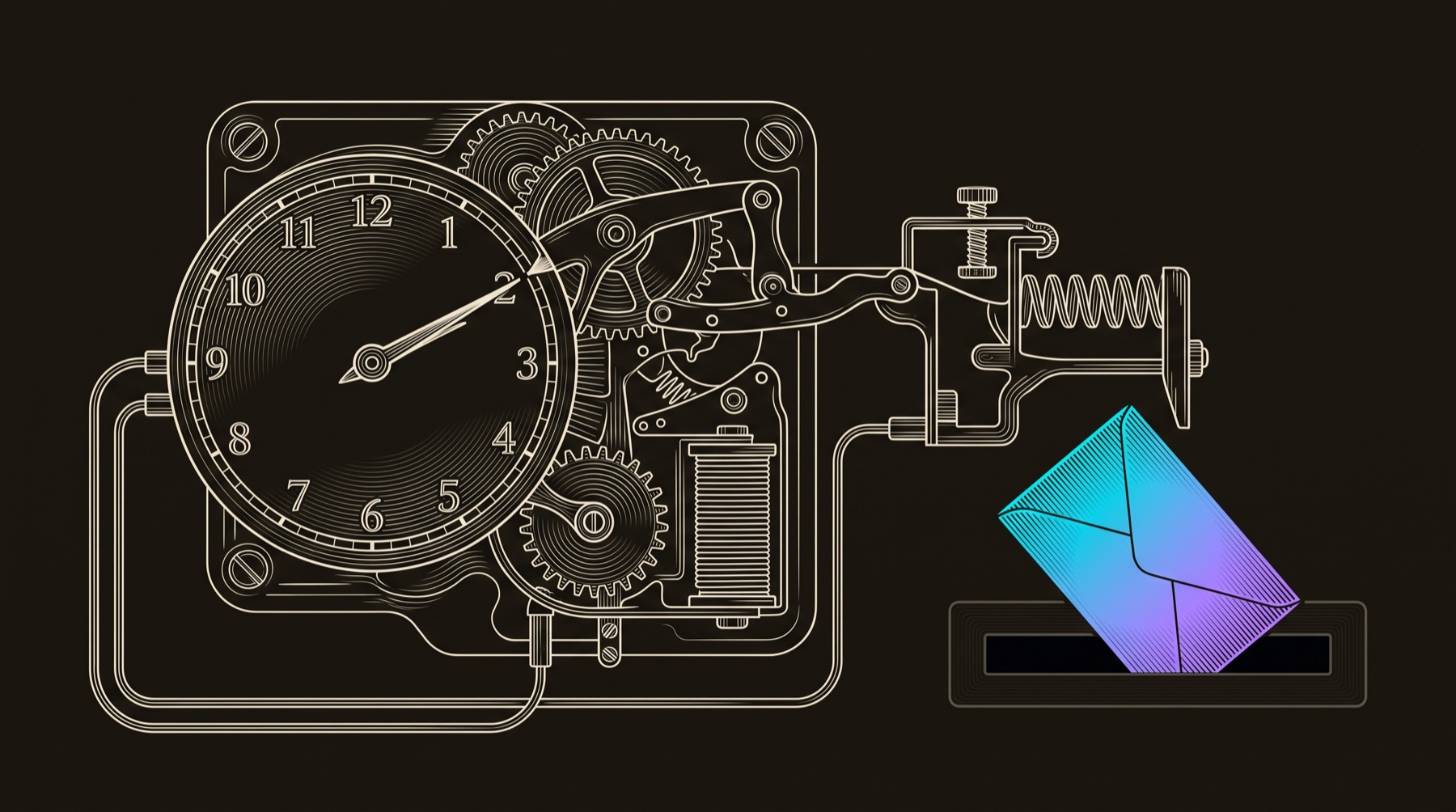
Illustrated lead image for the article on follow up as implementation intention.
Cream line-engraving portrait of Daniel Conn, Co-Founder, graph8 and GTM Strategist. DC
Leader spotlight
The replies live in touches four through six, and that is exactly where manual discipline dies. Pre-decide the rule: when no reply by day three, the next touch fires with something new in it. Once the sequence executes itself, coach the new failure mode instead: the rep who never reviews what went out.
Daniel Conn Co-Founder, graph8 and GTM Strategist

The question

The persistence gap is one of the oldest findings in outbound: across published vendor datasets, positive replies concentrate in mid-sequence touches, while most reps stop after one or two attempts. The gap has survived a decade of training courses telling reps to follow up more. If exhortation worked, it would have worked by now. The interesting question is why it fails, and what works instead.

123 456 Touch number Most reps stop Reply density rises late
Positive replies concentrate in the later touches, exactly where most reps stop sending.

The evidence

Gollwitzer (1999) distinguished goal intentions ("I will follow up more") from implementation intentions ("when X happens, I will do Y at time Z"). Across hundreds of studies meta-analyzed in Gollwitzer and Sheeran (2006), implementation intentions produced medium-to-large improvements in follow-through, in domains from health behavior to studying. The mechanism is delegation of control to the situation: the decision is made once, in advance, and the trigger executes it, so the moment's mood and competing demands lose their vote.

A sales sequence is an implementation intention in industrial form. The decision to send touch five was made on design day, rationally, with the evidence in view. The rep who quits at touch two is not lazy; they are making a fresh decision under discouragement, which is exactly the condition implementation intentions exist to remove.

Pre-decided rule when no reply, day 3 then send touch 4 fires on the trigger vs relying on daily willpower mood and competing demands get a vote
An implementation intention pre-decides when and how the next touch fires, instead of leaving it to daily willpower.

The mechanism

Designed once, the sequence runs on its trigger structure: day offsets, channel switches, conditional stops. Modern orchestration completes the logic by removing the human from execution entirely. The system never gets discouraged at touch two.

But automation moves the failure, it does not remove it. Parasuraman and Riley (1997) documented the drift: when a system runs itself, human attention decays. The sequence-era failure mode is not quitting early; it is the unread reply, the unreviewed exception, the sequence still running on an account that answered. And reply latency is expensive: the lead-response literature (Oldroyd et al. 2011) shows engagement decays within hours.

Manual quits early stops after touch 2 Automated runs, unreviewed every touch fires reply sits unread
Automation moves the failure: the manual rep quits early, the automated sequence runs but the human forgets to review.

Implications for practice

Design the sequence as the commitment device it is: six to ten touches for a tier-1 account, spacing that widens over time, every touch adding something new, a breakup touch that closes with dignity. Then let the system execute it, and move the human discipline to the two places it still matters: the daily reply sweep with a response-time standard measured in hours, and the weekly readout where the weakest touch gets redesigned.

In the curriculum this paper underpins the motion design units of PA 110 and the operate loop of PA 120. The maturity ladder restates it: at Manual, follow-up is willpower; at Orchestrated, it is architecture.

graph8 light-abstract closing band: the architecture, running.
The touch that lands

Pre-decide the follow-up and it survives the busy week. The reply usually arrives after the touch most reps never send.

References
  1. Gollwitzer, P. (1999). Implementation intentions: strong effects of simple plans. American Psychologist 54(7).
  2. Gollwitzer, P. and Sheeran, P. (2006). Implementation intentions and goal achievement: a meta-analysis of effects and processes. Advances in Experimental Social Psychology 38.
  3. Parasuraman, R. and Riley, V. (1997). Humans and automation: use, misuse, disuse, abuse. Human Factors 39(2).
  4. Oldroyd, J., McElheran, K. and Elkington, D. (2011). The short life of online sales leads. Harvard Business Review.
Keep reading

More from the library.

Research review From market map to system: the consolidation of the sales stack For a decade Tenbound mapped the sales technology category: hundreds of vendors across engagement, dialing, intent, enrichment, conversation, and management, with the BEAST Awards honoring the best of each. That map is now collapsing, not because the point solutions failed but because the functions they pioneered are becoming capabilities of unified systems. The institution that kept the map documents the consolidation: the mechanism, the evidence, what it means for buyers, and a disclosure of our own position in it. Research review The 95-5 problem: most of your market is not in market At any given moment, roughly 95 percent of category buyers are not in a buying cycle. This review examines the evidence behind the 95-5 heuristic, the memory mechanism that makes it matter, and what it implies for how outbound pipeline should be architected: tiering by timing, signal infrastructure, and patience as a designed system rather than a virtue. Research review The jagged frontier comes to sales development Two field experiments changed what we know about AI at work: generative AI lifted the least experienced workers most, and it improved quality dramatically on tasks inside its capability frontier while degrading judgment on tasks just outside it. This review translates both findings into a delegation discipline for sales development teams: which pipeline tasks to delegate, which to direct, and which to keep fully human.
Programmable Revenue Weekly

The weekly research report: the finding, the evidence, the practice change. Plus the invite to our weekly GTM founder call. Free, written like the papers. Unsubscribe any time.