A map keeper's confession
Tenbound has maintained the sales technology market map for a decade: version after version, hundreds of vendors organized into the categories that defined the modern stack. Sales engagement platforms. Power dialers. Intent data. Data and enrichment. Conversational marketing. Sales management and enablement. The BEAST Awards honored the best of each category, voted by the community that used them, and that record stands in our Hall of Fame.
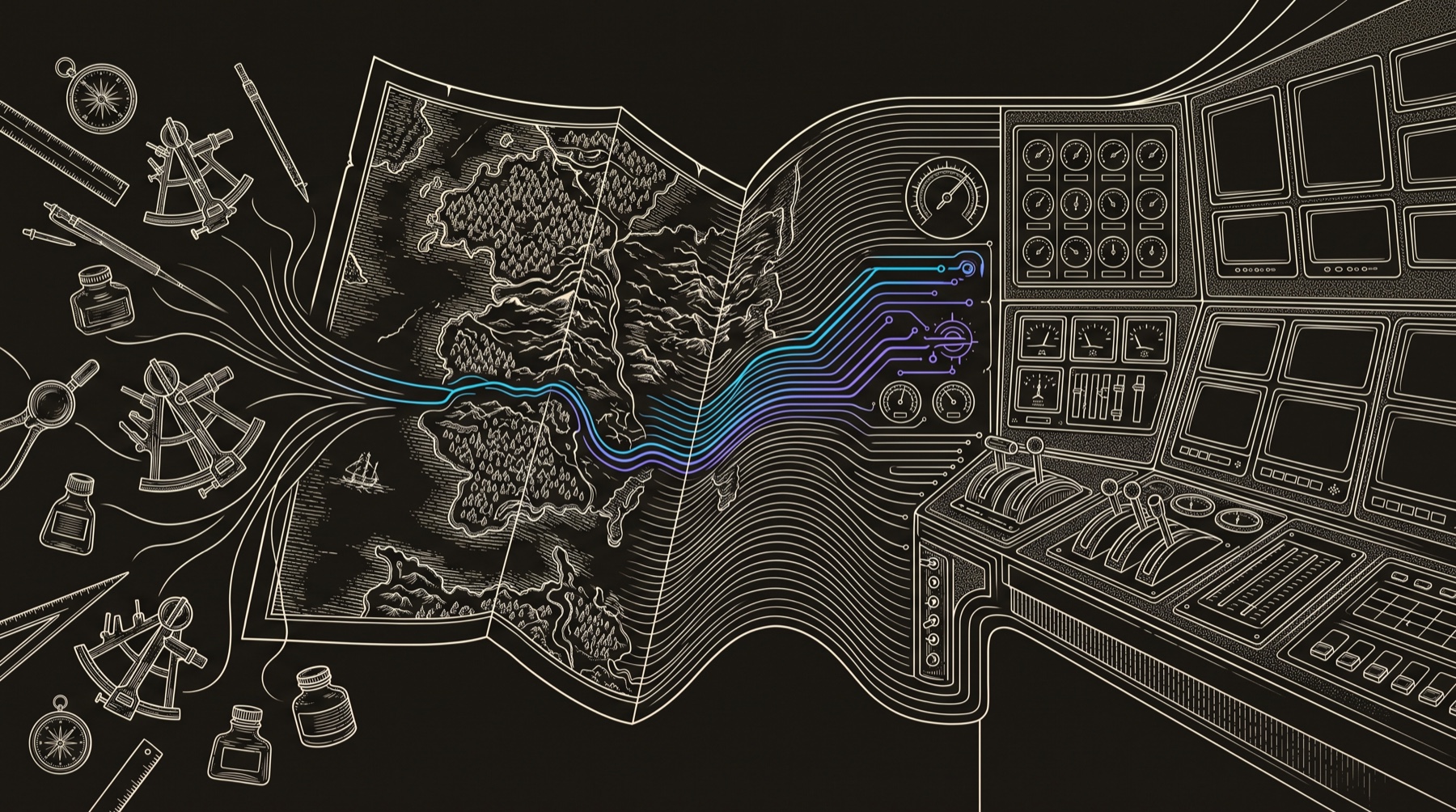
The honest reading of the current map is that the categories themselves are dissolving. This is the kind of structural observation an institute exists to make, even, especially, when it implicates the institution's own group.
The mechanism
The cycle is well described in the industrial literature: industries oscillate between integration and modularity (Christensen 1997; Baldwin and Clark 2000). When a technology is young, integrated solutions win because the interfaces between components are not yet good enough. As interfaces standardize, the system modularizes, and best-of-breed point solutions bloom. That bloom was the 2015 to 2023 sales stack, and the market map was its atlas.
Modularity holds as long as the integration burden sits with the buyer at an acceptable cost. Two things broke that equilibrium. First, the integration burden grew faster than the value: the average sales development stack became a part-time systems job, with every tool holding a fragment of the buyer picture. Second, and decisively, AI execution rewards unified data. An autonomous motion needs the signal, the contact, the message, the send, the call, and the reply in one graph, because every step conditions the next. A stack of point solutions can pass records; it cannot share a brain.
So the pendulum swings back to integration. The functions do not disappear. The sequencing engine, the dialer, the intent feed, the enrichment layer, the conversational agent: each was a company, and each is becoming a capability.
What the BEAST categories become
Read the award categories of the last cycle against the architecture of a unified revenue system and the mapping is nearly one to one: the sales engagement platform becomes the campaign and sequence layer. The power dialer becomes the voice layer, increasingly with AI on the line. Intent data becomes the signal layer. Data and enrichment become the graph itself. Conversational marketing becomes the inbound agent. Management and enablement tooling becomes the telemetry and coaching layer over all of it. What was a map of companies becomes the org chart of one system.
None of this diminishes what the point-solution era built. The category winners in our record earned their awards; their innovations defined the functions the systems now absorb. That is how integration cycles work: the consolidator inherits the pioneers' homework.
Disclosure, and why we publish this anyway
Tenbound operates inside the graph8 group, and graph8 is a unified revenue system: the consolidation this paper describes is the thesis our own group is built on. The reader should weigh that. The reason we publish under that conflict rather than around it is the Institute's standing rule: claims must survive their citations. The integration-modularity cycle is not our invention, the stack fatigue is measurable in any team's tool audit, and the AI-needs-unified-data argument can be tested against any team's attempt to run an autonomous motion across six vendors. If the argument is wrong, it will be wrong in public, checkably.
What it means for buyers
Three practical consequences. First, evaluate systems, not stacks: the relevant question is no longer which tool wins each category but which system holds the graph your motion runs on, and what it costs to leave. Second, the build-bias shifts: capabilities you once bought as products increasingly arrive as configuration inside a platform, which moves the scarce skill from procurement to orchestration, the exact shift the Academy's PA 120 and the 300-level courses train. Third, the maturity ladder reads differently: at Manual and Assisted the stack question dominates; at Orchestrated and Autonomous the system question does. Teams budgeting a stack refresh in 2026 should price both paths before renewing anything.
The market map served the modular decade. The Institute will keep publishing it as the historical record it has become, and will map what replaces it: the architecture of systems.

Hundreds of point solutions become capabilities of one graph. The seams were the cost; the system is the fix.